
By Dave Cucchiara
Communications & Program Associate
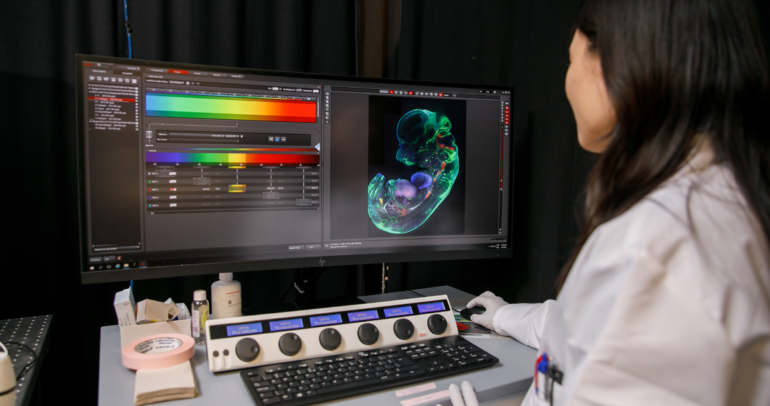
In the pursuit of groundbreaking scientific breakthroughs, few researchers have as personal a stake in their work as those living with the disease they aim to cure. Diagnosed with type 1 diabetes (T1D) during graduate school, Dr. Michael Brehm, PhD, has spent his career unraveling the mystery behind a disease that affects him every day. Dr. Brehm is a professor in the Diabetes Center of Excellence and in the Program in Molecular Medicine at UMass Chan Medical School in Worcester, Mass., and directs a lab on the front lines of diabetes research — supported in part by F. M. Kirby Foundation partner Breakthrough T1D, a leading nonprofit driving progress toward curing a disease that affects more than 2 million people nationwide. The Brehm lab is investigating human cells and tissues using a novel model, with the goal of a cure or cellular therapy for T1D that would not require the use of immunosuppressive drugs.
Dr. Brehm’s journey into science began in high school, discovering his interest in microbiology during the height of the HIV/AIDS epidemic. He eventually attended the Philadelphia College of Pharmacy and Science (now part of St. Joseph’s University), earning his B.S. in Microbiology in 1993, but his career took a turn during graduate school, when he began experiencing fatigue, extreme thirst, and dramatic weight loss.
“My girlfriend, now my wife Sonja, encouraged me to go to the doctor,” Dr. Brehm said. “My blood glucose was over 600 — so high that the glucometer couldn’t read it. I had no family history. It was a complete shock.”
This was during a time when diabetes care lacked many of today’s innovations like insulin pumps or continuous glucose monitors. But Dr. Brehm managed through medication, diet, and exercise, entering a prolonged “honeymoon phase” that offered him enough time to adapt. After joining a lab at UMass focused on viruses and immunology, Dr. Brehm began collaborating with investigators in the Diabetes Center on a project to cure diabetes in mice by the transplant of pancreatic beta cells that sense glucose and secrete insulin. This early work investigating how general inflammation alters survival of the beta cells and opened the door to deeper questions about autoimmune responses — the very responses that destroy insulin-producing beta cells in T1D.
Today, Dr. Brehm’s lab investigates how T cells from people with diabetes behave and how they might be regulated. A critical piece of this research involves “humanized mice,” a powerful model developed in collaboration with colleagues Dale Greiner and Lenny Shultz. These mice are engineered to carry human immune systems and pancreatic islets, enabling scientists to observe how immune cells from a T1D patient interact with insulin-producing cells derived from the same person’s stem cells.
“These models allow us to replicate, as closely as possible, the autoimmune attack that occurs in type 1 diabetes,” Dr. Brehm said. “These preclinical models give us an unparalleled window into disease mechanisms.”
This cutting-edge research is supported by Breakthrough T1D, a global leader in funding T1D research and advocacy. Formerly known as JDRF, the organization is focused on accelerating life-changing breakthroughs to cure, prevent, and treat T1D and its complications. Through support like theirs, researchers like Dr. Brehm are pushing the boundaries of what’s possible, from studying disease progression to developing future therapies.
 “We’re seeing real progress,” Dr. Brehm said. “The goal is to generate mature, functional islets from human stem cells that don’t require immunosuppression. Companies like Vertex and Novo Nordisk are investing heavily in this space, and we’re partnering with a regenerative medicine facility to help scale production.”
While diabetes research has progressed significantly over the last five years, some obstacles remain. Among them is the body’s immune response, which continues to attack transplanted cells. Dr. Brehm’s team is exploring ways to make these cells “invisible” to the immune system using CRISPR and other gene-editing tools — a step that could make universal, off-the-shelf islet therapy a reality.
Despite the challenges, Dr. Brehm remains optimistic, not just about the science, but about the next generation of researchers.
“A PhD rewires your brain,” he says. “We learn to approach problems in rigorous, creative ways. Watching students transform into confident scientists is one of the most rewarding parts of my job.”
For someone who never expected to live with the disease he now studies, Dr. Brehm’s work is more than academic. It’s personal. Thanks to the support of Breakthrough T1D and other partners, the possibility of a cure is closer than ever.